Best Guard for Blue Belts in BJJ? Start With Retention, Not Offense
 Chasen Hill
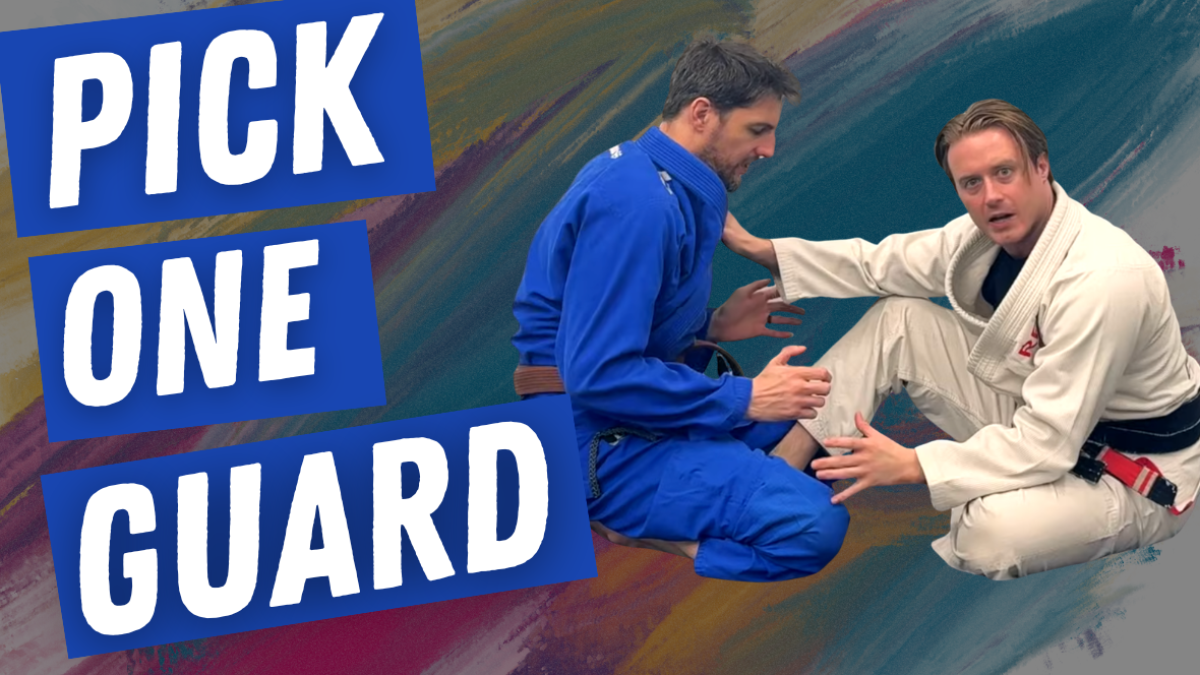
Wondering what the best guard for blue belts is in BJJ? Learn why guard retention matters first and how to choose the right guard for you.
Best Guard for Blue Belts in BJJ? Start With Retention, Not Offense
One of the biggest mistakes I see blue belts make in Brazilian Jiu-Jitsu is misunderstanding what the guard is really for.
Most students first learn the guard through offense. They learn a cross choke, an armbar, maybe a triangle, and naturally start thinking of the guard as a place to attack from. That is not wrong, but it is incomplete.
If you are trying to figure out the best guard for blue belts, the better question is this:
Which guard can you consistently recover, retain, and build your game around?
At blue belt, the guard should not just be viewed as an offensive platform. It should be studied first as a defensive tool. If your BJJ guard retention is weak, your offense will always feel inconsistent because you will not be able to hold the position long enough to do anything meaningful with it.
In this article, I want to break down why blue belts often struggle with the guard, how to choose the right one to focus on, and why funneling your escapes into one primary guard can dramatically improve your confidence and performance.
Why Blue Belts Often Struggle With Guard
A common pattern at blue belt looks like this:
- You escape mount, side control, or another bad position
- You get back to some form of guard
- You immediately try to attack
- You create a gap
- Your opponent starts passing again
On paper, moving quickly from defense to offense sounds great. In reality, it often causes problems.
If you are too eager to launch offense before you can actually maintain your guard, you give better training partners exactly what they need: openings. That is why so many blue belts feel like their guard works one day and falls apart the next.
The real issue usually is not a lack of submissions. It is a lack of structure.
Before your guard becomes dangerous, it needs to become dependable.
BJJ Guard Retention Comes Before Guard Offense
This is the shift I want more blue belts to make:
Stop thinking of guard as the place where offense begins. Start thinking of guard as the place where defense stabilizes.
That does not mean you ignore attacks. It means you put them in the right order.
First, you need to be able to:
- Recover a guard from bad positions
- Retain the guard when someone tries to pass
- Maintain the position long enough to slow the round down
- Force the fight back into a position you understand well
Once those things start improving, offense becomes much easier to build.
This is one reason many blue belts feel stuck. They are trying to grow their game outward before they have enough stability underneath it. If that sounds familiar, you may also relate to Why Most BJJ Blue Belts Stop Improving .
What Is the Best Guard for Blue Belts?
The truth is there is no single universal answer.
The best guard for blue belts is usually the one that fits your:
- Body type
- Flexibility and mobility
- Relative size compared to training partners
- Current escape patterns
- Natural preferences under pressure
For some students, that will be closed guard. For others, it may be half guard. For others, it may become some form of open guard, such as seated guard or butterfly guard.
The mistake is not choosing the “wrong” guard.
The mistake is trying to develop all of them at once without first identifying which one you naturally land in most often and which one you want to build your game around.
Blue belts usually need more depth, not more variety.
How Your Escapes Reveal Your Best Guard
One of the easiest ways to figure out your primary guard is to study where your escapes already take you.
For example, when you elbow escape from mount, you often end up in one of a few familiar places:
- Half guard
- Closed guard
- Knee shield or another open guard variation
- Butterfly guard or seated guard
The same is true when you shrimp out of side control. Your frames, your hip movement, your leg position, and your timing will naturally push you toward certain guard families.
This is important because your escapes are already showing you patterns.
If you keep finding yourself in half guard, that tells you something. If you naturally close your guard every chance you get, that tells you something too. And if you prefer staying mobile and creating distance, open guard may make more sense for you long term.
Instead of ignoring those patterns, study them.
Pick One Guard and Funnel Your Defense Toward It
This is where most blue belts can make a huge jump in a relatively short amount of time.
Pick one primary guard and start funneling your defensive movements toward it.
If your main guard is closed guard, then your mount escapes, side control escapes, and transitional recoveries should increasingly aim toward closed guard.
If your main guard is butterfly guard or another seated open guard, then stop automatically settling for positions you do not actually want to specialize in. Learn how to keep moving until you can force the exchange into your preferred guard.
This is one of the biggest differences between casual training and intentional training.
Casual training accepts whatever position appears.
Intentional training asks: Where am I trying to get to, and how do I keep steering the round there?
That mindset alone can make your guard feel far more reliable.
Why This Improves Guard Retention So Much
When you focus on one primary guard, several things start improving at once.
1. Your reactions become faster
You stop hesitating between too many options. You know where you want to go, so your body starts solving problems faster.
2. Your framing improves
Good guard retention depends on body alignment, distance management, and timing. Repeatedly steering toward the same position helps you refine all three.
3. Your confidence goes up
Instead of feeling lost in bad positions, you start trusting that you can work your way back to something familiar.
4. Your offense gets sharper naturally
When you arrive in the same guard more often, you also get more offensive reps from that guard. Your attacks become less random and more connected.
This is the kind of shift that takes a guard from a weak part of your game to a reliable one.
Closed Guard, Half Guard, or Open Guard for Blue Belts?
If you need a simple roadmap, most blue belts can begin by exploring one of these three categories:
Closed Guard
A strong option if you like controlling posture, slowing things down, and building clear offensive sequences. Closed guard can be especially useful for blue belts who want a more contained position to learn from.
Half Guard
A common landing point from many escapes. Half guard often suits students with shorter legs or students who naturally find themselves latching onto one leg during scrambles.
Open Guard
A good fit for students who like movement, distance, and dynamic entries into sweeps or attacks. Butterfly guard and seated guard often fall into this category and can become very effective once retention improves.
None of these are automatically the best for everyone.
But one of them is usually the best place for you to start building real depth.
How to Train This in Live Rolling
If you want to improve BJJ guard retention and identify your primary guard more quickly, here is a simple training approach:
- Spend several training sessions starting in bad positions
- Let training partners mount you, control side control, or take your back
- Escape with one clear goal: get back to your chosen guard
- Do not stop at “good enough” if you land somewhere in between
- Keep working until you reach the guard you want to develop
This is where a lot of students miss opportunities.
They reach half guard and pause there even though they really want to build closed guard. Or they recover closed guard even though their long-term goal is butterfly guard. They accept the first decent position instead of continuing to funnel toward the position they actually want to own.
Your guard development gets much better when your training objective becomes specific.
The Real Goal for Blue Belt Guard Development
The goal is not to know a little bit about every guard.
The goal is to become hard to hold down, hard to pass, and difficult to destabilize because you can keep returning to a guard that fits you.
Once that happens, your offense has a base to grow from.
If you are a blue belt trying to decide what to focus on next, this is one of the clearest answers I can give you:
Choose one guard. Learn to recover it. Learn to retain it. Learn to maintain it. Then build your offense on top of that.
That approach will usually take you much further than trying to collect more random techniques.
Want More Structure in Your BJJ Training?
If you feel like your Jiu-Jitsu is scattered and you want help identifying what to focus on, that is exactly what I help students do inside my program.
The Jiu-Jitsu Accelerator Program is designed to help you assess your game, identify your biggest strengths and weaknesses, and build a more structured path forward.
Instead of bouncing between random techniques, you can train with a clearer plan, better direction, and more confidence in what you are trying to develop.
If that sounds like what you need, you can learn more about the Accelerator here.
Related Articles
- Why Most BJJ Blue Belts Stop Improving
- How to Fix Closed Guard Posture in BJJ
- Why Jiu-Jitsu Takes So Long To Get Good At
- BJJ Drilling vs Sparring: Which To Focus On In Training
- How to Overcome Defeat in Jiu-Jitsu
Categories: : Bottom Jiu-Jitsu Library, Top Jiu-Jitsu Library, Standing Jiu-Jitsu Library